
Highlights

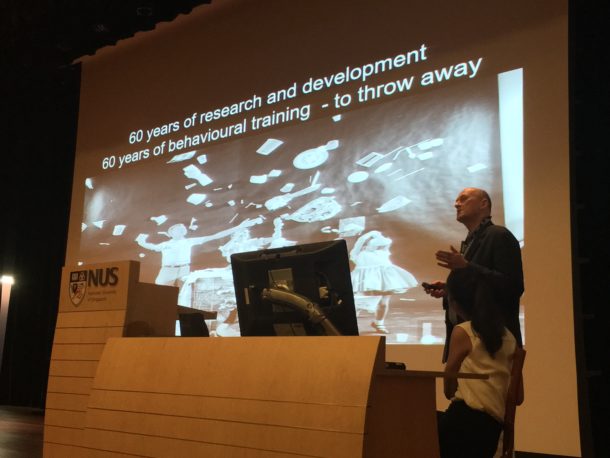
[Workshop Announcement] 10th South China Sea Tsunami Workshop

The workshop will be held from 10 – 11 October 2018 in NUS. Please contact Dr. Linlin Li at LLLI@ntu.edu.sg for email registration. This workshop is co-organised by Earth Observatory of Singapore, Nanyang Technological University, National University of Singapore (Department of Civil and Environmental Engineering) and IOC South China Sea Tsunami Warning Advisory Center, Beijing.

For more information, please visit http://tsunami.ihs.ncu.edu.tw/~scstw/2018/index.html.

[Workshop Announcement] 10th South China Sea Tsunami Workshop Read More »

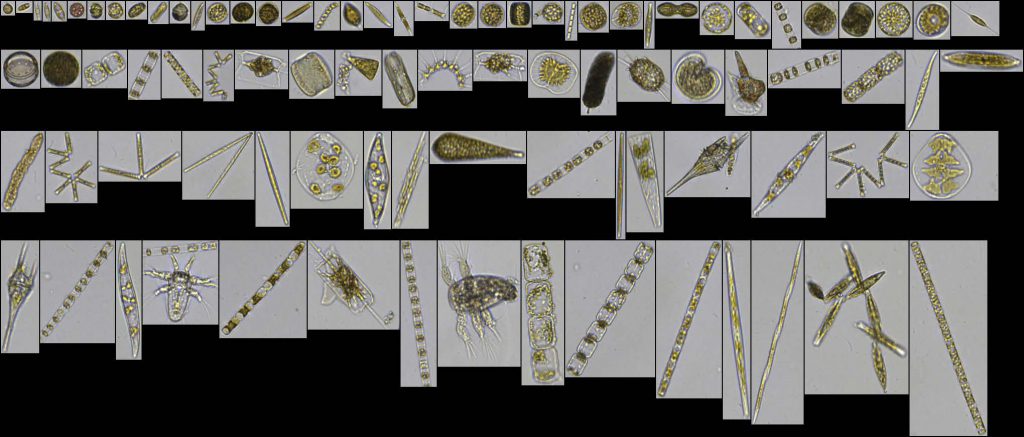
[New Equipment] FlowCam 8000

St John’s Island National Marine Laboratory is excited to announce the availability of the FlowCam 8000 for all registered users!

There will be a demonstration on the equipment on Tuesday, 25 September 2018 at 2.30pm.

The FlowCam is a dynamic liquid imaging particle analyser that rapidly takes images of magnified particles flowing through a fluidic system. This is then followed by the use of an image analysis software to characterise and identify the particles.

[New Equipment] FlowCam 8000 Read More »

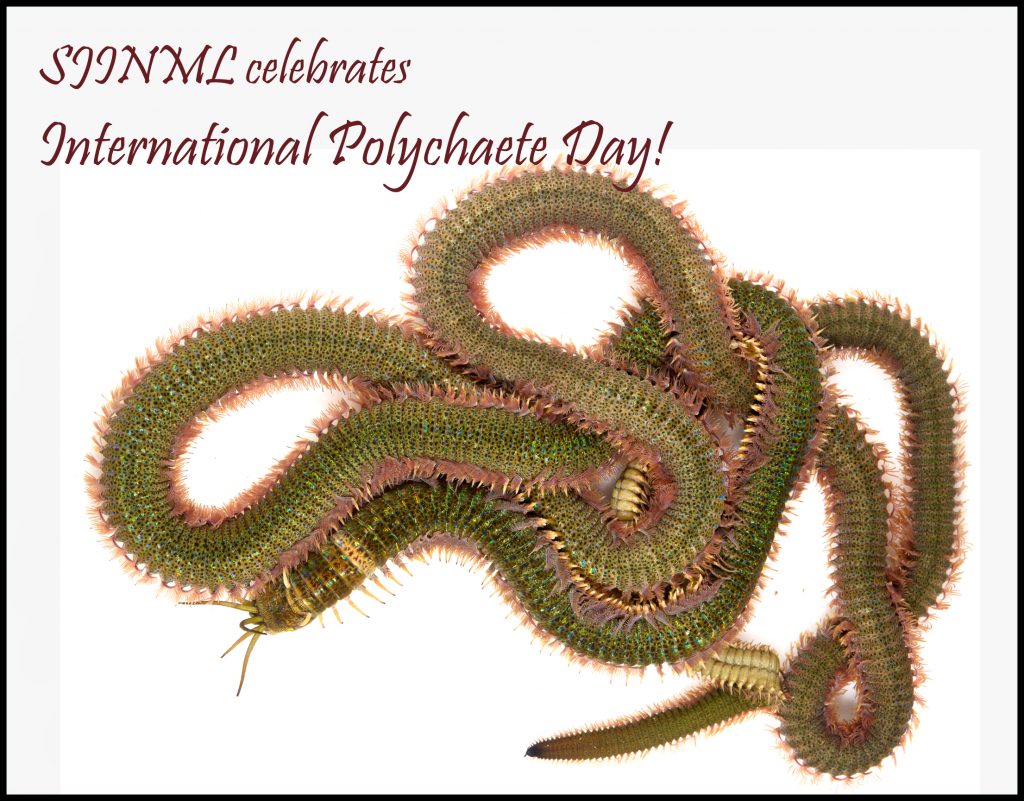
International Polychaete Day Feature Series IV

From local biodiversity to ecologically important tubeworms and their larval culture, we focused on various aspects of polychaete biology research conducted by scientists at the St John’s Island Marine Laboratory (SJINML). As we wrap up the International Polychaete Day special series, we share one more exciting research ― polychaetes found from deep sea biodiversity expeditions undertaken by scientists at the SJINML.

International Polychaete Day Feature Series IV Read More »

International Polychaete Day Feature Series III

This week’s feature on polychaete research at the St John’s Island Marine Laboratory (SJINML) continues on the subject of tubeworms but with a twist, literally and figuratively ― we introduce the biofouling spiral tubeworms known as spirorbins.

Tubeworms actually refer to polychaetes from the family Serpulidae, which include the species Spirobranchus kraussii from last week’s Feature Series II and the spirorbins that we will talk about today. Last week, we shared about their special ability to build hard calcareous tubes that encase their soft bodies. The tubes are important protective structures against predators and also desiccation when the tubeworms are out of water, for example during low tides.

International Polychaete Day Feature Series III Read More »

International Polychaete Day Feature Series II

Last week, we mentioned polychaete species that are relatively mobile in the sediment. Today, we shift the focus to a tubeworm species and its larval culture.

Tubeworms are sessile worms that build their homes (tubes) around their bodies. The tubes are usually attached to a fixed substrate. Some tubeworms can grow to large sizes. For example, Riftia pachyptila is one of the largest known tubeworms that can grow up to 1.5m in length, 4mm in diameter. It is found on the deep-sea floor at hydrothermal vents that are rich in hydrogen sulphide.

International Polychaete Day Feature Series II Read More »

International Polychaete Day Feature Series I

In this four-part series celebrating International Polychaete Day (1st July), we will feature four different polychaete research carried out at the St John’s Island Marine Laboratory. We are kicking it off with a subject closer to home ― the biodiversity of polychaetes in Singapore.

If you have heard of bloodworms, bristleworms, fanworms, feather-duster worms, fireworms, ragworms, scaleworms, sea mouse, spaghetti worms, tubeworms, would it surprise you that they are all actually polychaetes!

International Polychaete Day Feature Series I Read More »