

Outreach
Highlights

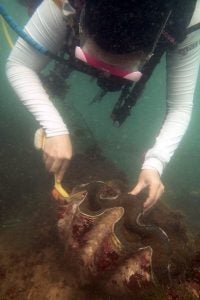
[Seminar] A Brief Introduction to Borneo Marine Research Institute and Coral Reef Research in Sabah
Borneo Marine Research Institute (BMRI) is one of three research institutes in Universiti Malaysia Sabah (UMS). It is strategically located along the shoreline of Sepangar Bay, Kota Kinabalu, providing easy access to the sea and surrounding habitats. The institute conduct marine and aquaculture research and offer postgraduate degree programmes. Undergraduate teaching of two programmes, marine science and aquaculture is conducted on behalf of Faculty of Science and Natural Resource. Facilities in the institute includes fish and invertebrate hatcheries, marine aquarium and museum, as well as boathouse and jetty.
Read More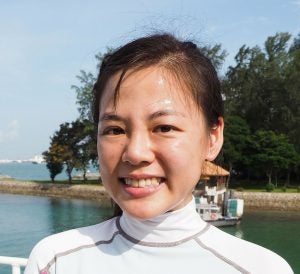
[News] Queen of the Deep
Dr Neo Mei Lin, a Research Fellow from St John’s Island National Marine Laboratory and the Tropical Marine Science Institute, was recently featured in the National University of Singapore’s The Alumnus magazine!
Read More
[Fireside Chat] Can Plastics to Fuel Technology Resolve the Plastic Waste Problem?
Of the 300 over million tonnes of plastics produced each year, less than 10 percent gets recycled. What happens to the rest? Some get sent to landfills where, when left to degrade, can leach harmful chemicals that spread into groundwater. Some are washed out through rivers into the oceans where they break down into microplastics that today is found in everything we eat and drink.
Read More
[Seminar] What if? How Asian coastal cities might embrace climate reality
Seminar by Ed GillespieIn conjunction with the British High Commission of Singapore Date: Wednesday, 25 September 2019Time: 4.30pm – 6.30pmVenue: CREATE Auditorium, 1 Create Way, CREATE Tower, National University of […]
Read More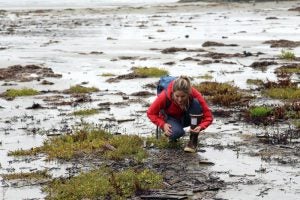
[News] The Double Whammy Of Microplastics In The Oceans
Researchers from St John’s Island National Marine Lab and the Tropical Marine Science Institute, Dr Sandric Leong and Ms Emily Curren are in the news once again for their research! The full story can be found here: https://www.asianscientist.com/2019/02/in-the-lab/toxic-bacteria-microplastics-ocean-pollution/.
Read More[Workshop] A Marine Science & Thermodynamics Workshop
Date: Wednesday, 5 June 2019 Time: 1830 – 2200 Venue: Roxy 1 Room, Grand Mercure Singapore Roxy, 50 East Coast Road Roxy Square, Singapore 428769 The aim of the workshop is […]
Read More
[Insights] Celebrating International Day of Biological Diversity 2019
Today – Wednesday 22nd May – is the International Day of Biological Diversity 2019. This year’s theme is “Our Biodiversity, Our Food, Our Health”. You can find more information about IDB and the Convention on Biodiversity at their website, https://www.cbd.int/idb/.
Many Singaporeans profess to live to eat, and one of the most frequent questions we get during our nature guided walks around St John’s Island is “this one eh sai jiak bo?” (can this be eaten?).
Read More[Seminar] The Future of Coral Reefs: Bridging Science to Policy and Knowledge to Action
Both the value and plight of corals reefs are well established. During the past five decades, researchers have identified the key problems affecting reefs, including sedimentation, pollution, overfishing and climate change. We have also documented extensive losses, with an estimated 50% of reefs having been severely impacted during this period, as a result of human activities. Some reefs are thriving and have demonstrated the capacity for recovery from both local and global level stressors. Others have passed a tipping point and reached an alternate stable state, dominated by algae, and are unlikely to recover without interventions.
Read More[Exhibition] prep-room DRILLS: Sites, Stories and Subsequence
Where: NUS Museum, 50 Kent Ridge Crescent, Singapore 119279 When: From now until December 2019 Sites, Stories and Subsequence is a prep-room project with Asia Research Institute that excavates, assembles and envisages the complex physical […]
Read More